

Systems for manufacturers - work orders, shop floor and plan in one place
For CEOs and plant directors of manufacturing companies with 20-250 people, where an order passes through the office, process engineering and the shop floor. I build one system where the office and the shop floor work on the same data - from order intake to the production report.
One order lives in several places at once.
Paper, spreadsheets and shouted updates on the shop floor hold production together, but each of these channels tells a slightly different story. The more orders in progress, the harder it gets to say where the work really stands.
The signals I hear most often
- An order gets lost between the office and the shop floor - only the person currently handling it knows its status.
- The production plan is built in Excel and quickly drifts away from what is happening at the workstations.
- Machine utilisation remains a gut feeling - hard data on downtime is difficult to get at.
- Order progress comes in late: at the end of the day or from conversations on the shop floor.
- An urgent change of priority overturns the manually built schedule.
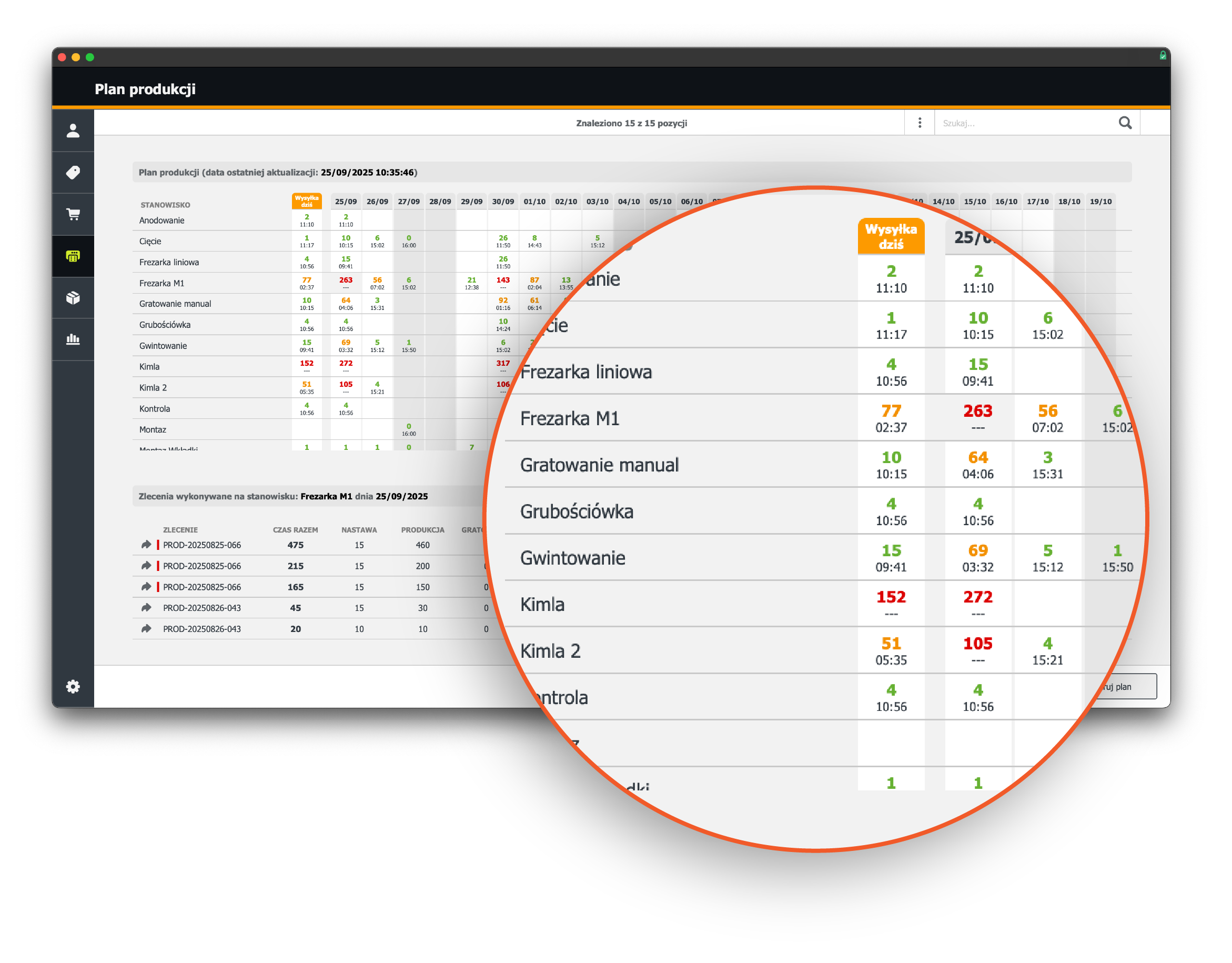
One system: from the work order to the workstation
The system speaks the language of the shift leader and the planner. An order has one status, the plan matches the reality of the shop floor, and reports generate themselves.
What it includes
- Production orders with a clear status and history - a single source of truth for the office and the shop floor.
- Process engineering - routings, operations and time standards linked to the order.
- A production plan broken down by days and workstations, with a view of machine load.
- An operator panel on an iPad right on the shop floor - confirming work, reporting downtime and scrap.
- Reports on machine utilisation, on-time delivery and bottlenecks, current at all times.
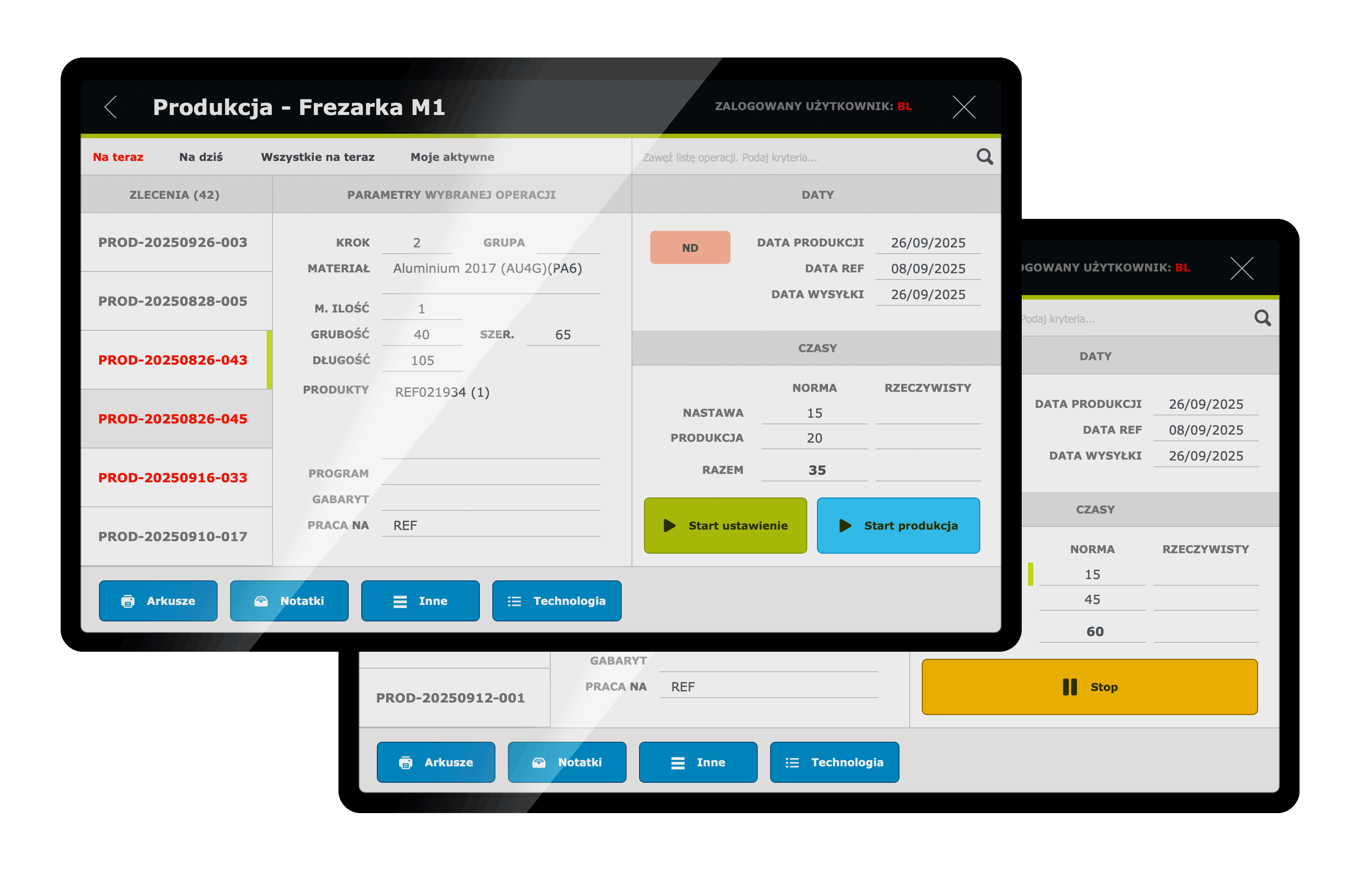
The plan matches reality, decisions rest on numbers.
The office and the shop floor stop drifting apart, because they work on one set of data. You can see which orders are on schedule, where a bottleneck is forming and how the machines are really running. You change priorities deliberately, with a full picture of the load - rather than in the dark.
We usually start with the single most pressing process and grow the system together with the company. If you run production on spreadsheets today, I have a separate, proven starting path - the first module in 14 days.
Tell me about your production See the quick start from Excel
Book 30 minutes or write a message.
The first call is a calm conversation to get to know each other. I check whether I can genuinely help. No slides, no sales pressure. If I see it is a poor fit, I say so directly.
Prefer to write?
Briefly describe what you need - I reply within one business day. Often sooner.
Phone +48 601 789 966 - feel free to call, I answer the phone myself.